Type of office chair
There are various types of office chairs designed to provide comfort and support during work hours. Some common types include:Task Chair: These are basic chairs designed for short to medium-term use at a desk or workstation. They usually have swivel and adjustable height features.
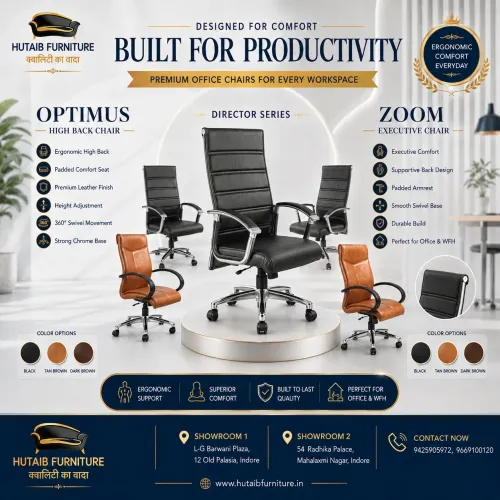
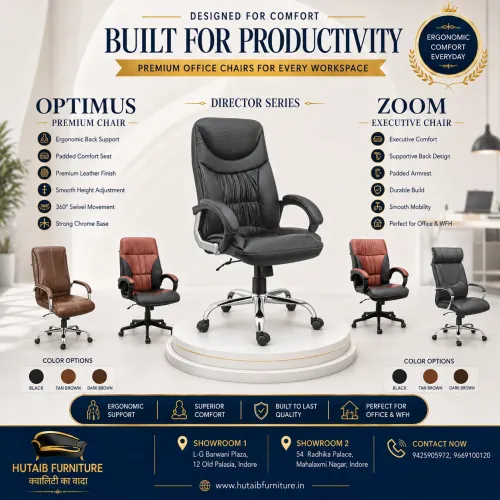
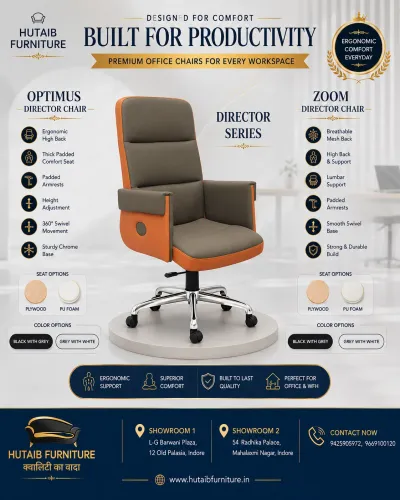
Executive Chair: These are larger and more luxurious chairs typically used by managers or executives. They often have high backs, plush cushioning, and may include additional features like adjustable armrests and headrests.
Ergonomic Chair: These chairs are designed to promote proper posture and provide optimal support for the body during long periods of sitting. They often have adjustable features such as lumbar support, armrests, seat depth, and recline angle.
Mesh Chair: These chairs have a breathable mesh back that allows air circulation, making them suitable for those who tend to get hot or sweat during long sitting sessions.
Guest Chair: Guest or visitor chairs are designed for short-term use and are often placed in reception areas or meeting rooms. They may not have as many adjustable features as task chairs.
Conference Chair: These chairs are used in conference rooms or meeting spaces. They are often designed for comfort during extended periods of sitting and may have a more professional appearance.
Drafting Chair: Also known as a standing desk chair, these chairs are designed for use with taller work surfaces like drafting tables or standing desks. They allow users to sit at a height that accommodates their work surface.
Ball Chair: These chairs have an exercise ball as the seat. They encourage movement and active sitting, which can help improve core strength and posture.
Kneeling Chair: Kneeling chairs have a unique design that tilts the body forward, distributing the weight between the buttocks and knees. They are meant to promote an open hip angle and reduce strain on the lower back.
Recliner Chair: Some office chairs offer a reclining feature, allowing users to lean back and relax. These are often found in executive or home office settings.
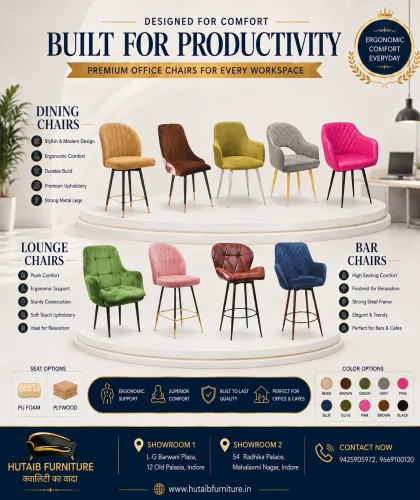
Lounge Chair: These chairs are designed for comfort during short breaks or relaxation periods. They usually have a more relaxed and casual design.
When choosing an office chair, consider factors like your work habits, ergonomic needs, and personal preferences. A chair that provides proper support and comfort can significantly impact your productivity and well-being during long work hours.
Task Chair: These are basic chairs designed for short to medium-term use at a desk or workstation. They usually have swivel and adjustable height features.
Executive Chair: These are larger and more luxurious chairs typically used by managers or executives. They often have high backs, plush cushioning, and may include additional features like adjustable armrests and headrests.
Ergonomic Chair: These chairs are designed to promote proper posture and provide optimal support for the body during long periods of sitting. They often have adjustable features such as lumbar support, armrests, seat depth, and recline angle.
Mesh Chair: These chairs have a breathable mesh back that allows air circulation, making them suitable for those who tend to get hot or sweat during long sitting sessions.
Guest Chair: Guest or visitor chairs are designed for short-term use and are often placed in reception areas or meeting rooms. They may not have as many adjustable features as task chairs.
Conference Chair: These chairs are used in conference rooms or meeting spaces. They are often designed for comfort during extended periods of sitting and may have a more professional appearance.
Drafting Chair: Also known as a standing desk chair, these chairs are designed for use with taller work surfaces like drafting tables or standing desks. They allow users to sit at a height that accommodates their work surface.
Ball Chair: These chairs have an exercise ball as the seat. They encourage movement and active sitting, which can help improve core strength and posture.
Kneeling Chair: Kneeling chairs have a unique design that tilts the body forward, distributing the weight between the buttocks and knees. They are meant to promote an open hip angle and reduce strain on the lower back.
Recliner Chair: Some office chairs offer a reclining feature, allowing users to lean back and relax. These are often found in executive or home office settings.
Lounge Chair: These chairs are designed for comfort during short breaks or relaxation periods. They usually have a more relaxed and casual design.
When choosing an office chair, consider factors like your work habits, ergonomic needs, and personal preferences. A chair that provides proper support and comfort can significantly impact your productivity and well-being during long work hours.
Keywords